
Artboard 1-1

Join us for a live webinar exploring how advanced spectroscopic techniques can help unravel the complex electronic structure and collective behavior of quantum materials.

Gain new insights, hear from experts in the field, and discover how different approaches can deepen our understanding of these fascinating materials.

October 20, 2026 | 10:00–11:00 CEST | 16:00–17:00 CST


What you will learn:

Complementary techniques

How ARPES and HREELS complement each other in studying quantum materials

Fast, high-resolution measurements

How multichannel HREELS enables fast, high-resolution measurements of surface excitations

Multimodal characterization

How multimodal characterization on a single platform reveals the link between electronic structure and collective excitations

Hear from our speaker

About this webinar

Quantum materials exhibit complex electronic band structures and a wide range of collective excitations like phonons. Understanding how these excitations interact with electronic states is essential for revealing the mechanisms behind emergent quantum phenomena.

Scienta Omicron provides advanced surface science solutions for probing both electronic band structures and collective excitations. Angle-resolved photoemission spectroscopy (ARPES) has become an indispensable tool for mapping electronic band structures, while high-resolution electron energy loss spectroscopy (HREELS) enables investigation of surface excitations including phonons, plasmons, magnons, excitons, and molecular vibrations. Our multichannel HREELS technology delivers orders-of-magnitude faster data acquisition than conventional single-channel instruments, enabling efficient measurements without compromising energy resolution.

Learn more

In this webinar, we will present new high-resolution HREELS results demonstrating the performance and capabilities of the latest multichannel HREELS instrumentation. We will also discuss how integrating HREELS with ARPES/XPS on the same platform enables comprehensive multimodal characterization of quantum materials using the same sample and analyser.

Join us to discover how combined ARPES and HREELS measurements provide unique insights into the relationship between electronic structure and collective excitations, while gaining an introduction to the principles and applications of both techniques.

e1dacbc0-7b44-4b56-941f-8c06c6590bee

Meet the speakers

Takahiro Hashimoto

Dr. Takahiro Hashimoto

 Product Manager – Electron Spectroscopy, Scienta Omicron 

Dr. Hashimoto has a PhD in Science at University of Tokyo (Japan), where he worked with ultrahigh resolution laser ARPES. He joined Scienta Omicron as development engineer in 2020. He has contributed to and led multiple developments in high resolution ARPES.
He has published a patent on electron detectors, and two review papers about laboratory based HAXPES. 

In his current role he supports researchers using Scienta Omicron’s electron spectroscopy solutions. As product owner, he translates customer needs into tangible solutions that can support the growing needs of the surface science research community

Yumeng-1

Dr. Yumeng Zhang

Sales Engineer, Scienta Omicron

Dr. Zhang received her PhD in Physics from ShanghaiTech University, where her research focused on strongly correlated quantum materials and their electronic structure using ARPES.

Her expertise spans ARPES, ultrahigh-vacuum experimental systems, synchrotron-based measurements, and electronic structure analysis, and she was a visiting PhD student at the University of Oxford. She now works at Scienta Omicron China, supporting customers with advanced scientific instrumentation and electron spectroscopy technologies.

Explore the technology

ARPES_Cam_01_2025-06-10_1

ARPES

Discover how Angle-Resolved Photoelectron Spectroscopy provides detailed insights into the electronic structure and band dispersion of materials.
 
Learn more
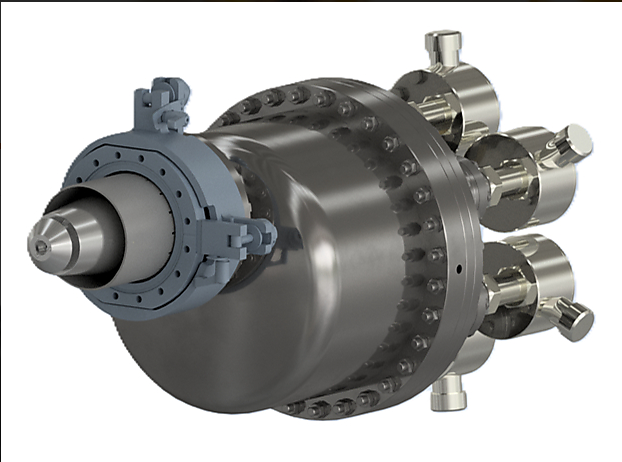
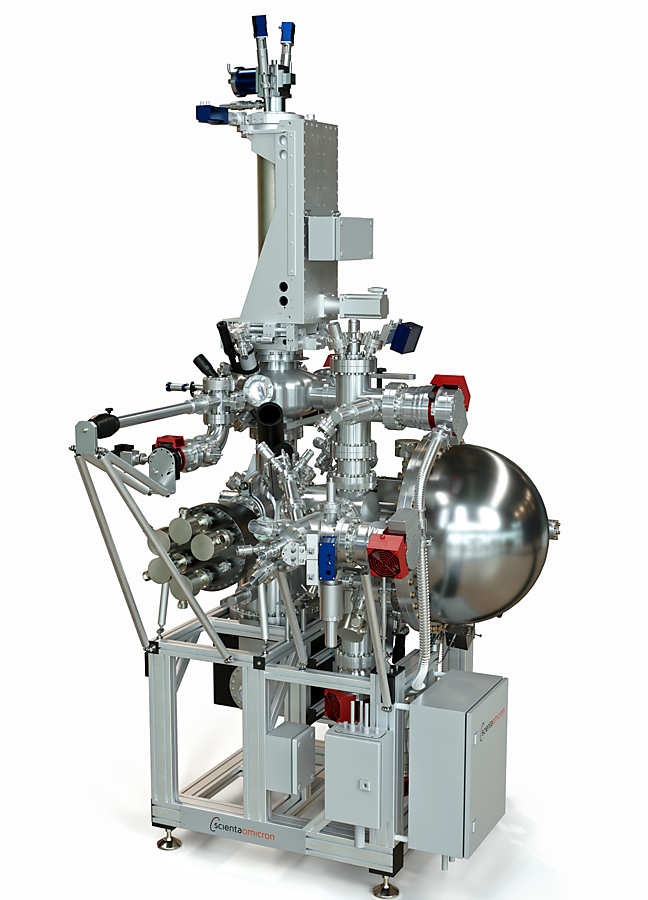
MCES150

HREELS

Explore how High-Resolution Electron Energy Loss Spectroscopy enables the investigation of surface excitations and collective phenomena.
 
Learn more

Don't miss the webinar